
Blog · Styling guide
How to style outfits when shopping online: a complete guide to smarter fashion shopping
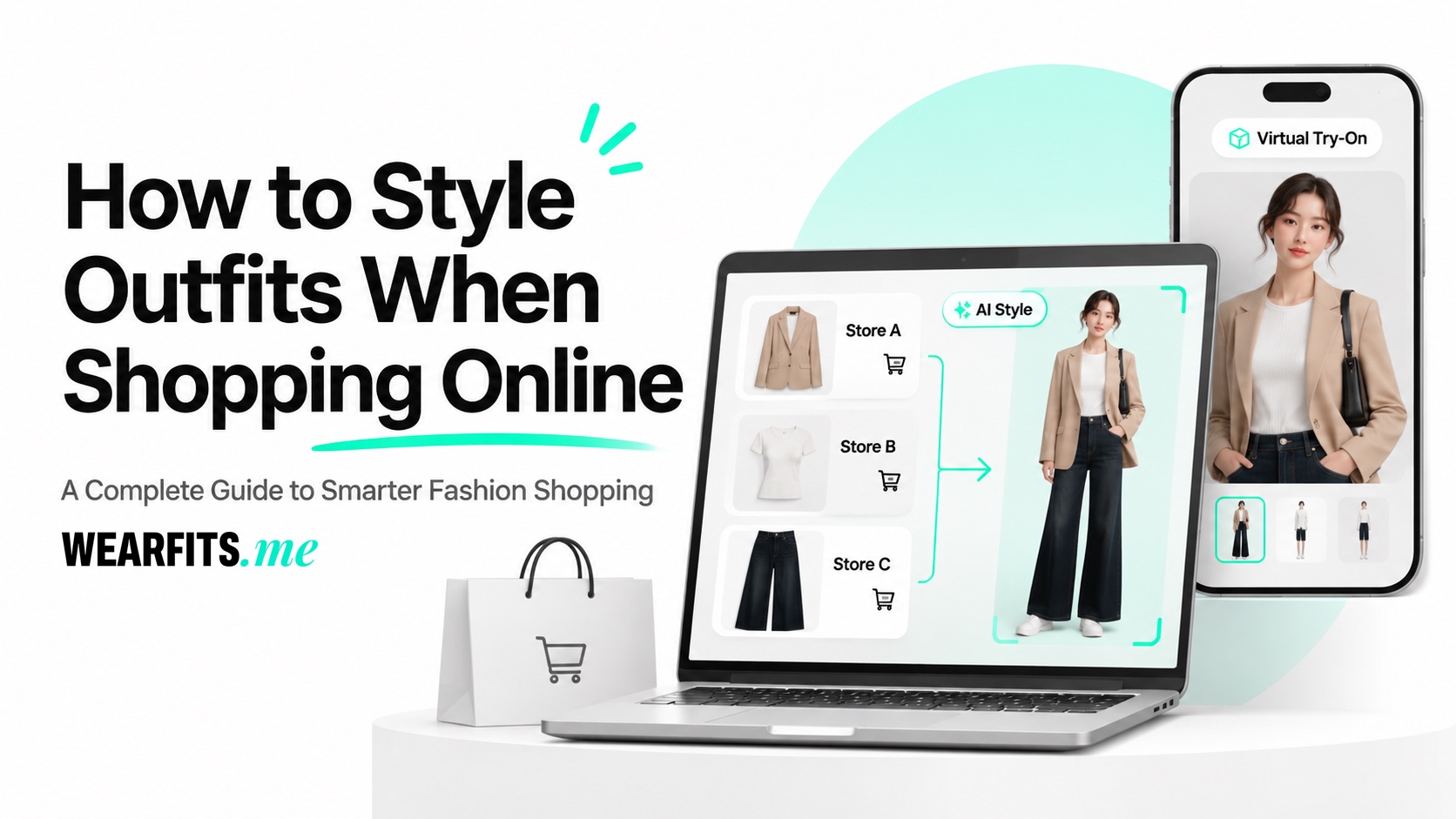
Online shopping has completely changed the way we discover fashion. We can explore thousands of products, compare brands, discover new trends, and buy almost anything without leaving home. But there's one challenge that every online fashion shopper knows: how do you create a complete outfit when all the clothes are displayed separately, often across different stores?
A pair of trousers looks amazing on one website. You find the perfect jacket somewhere else. Then you discover shoes that could complete the look. But will everything actually work together? And more importantly, how will the outfit look on you?
At WEARFITS, we believe shopping for clothes online should be about creating personal style, not just collecting products in a shopping cart. Thanks to generative AI and virtual try-on technology, there's now a smarter way to experiment with fashion and visualize your outfits before making a purchase.
In this guide, we'll explore how to style outfits online, combine clothing from different retailers, and use AI fashion technology to make more confident shopping decisions.
Why styling clothes online can be difficult
When shopping in a physical store, you can take several pieces into a fitting room, try different combinations, and immediately understand whether an outfit works.
Online shopping offers a completely different experience.
Fashion retailers usually present individual products on professional models, using different backgrounds, poses, and lighting conditions. A sweater might look perfect with the trousers worn by the model, but those trousers may not be available or may not match your personal style.
The challenge becomes even bigger when shopping across multiple brands.
Imagine building an outfit with:
- A minimalist blazer from one online boutique.
- Wide-leg jeans from another fashion retailer.
- A basic white T-shirt from a third store.
- Sneakers from your favorite footwear brand.
Individually, each piece looks great. Together? That's harder to predict.
Traditional e-commerce requires shoppers to imagine the final combination. Product photos, size guides, and customer reviews help, but they don't always answer the most important question: What will this complete outfit look like on my body?
This is where digital outfit styling and AI-powered virtual try-on can make a real difference.
1. Start with a clear outfit idea
Before opening ten different shopping tabs, think about the outfit you actually want to create.
Are you shopping for a specific occasion, such as a wedding, business meeting, weekend getaway, or dinner date? Or are you building a versatile everyday wardrobe?
Having a clear direction makes it easier to select pieces that complement each other.
For example, if you're creating a smart-casual outfit, you might start with tailored trousers and build around them using a relaxed shirt, loafers, and a structured jacket.
If you're going for a streetwear aesthetic, oversized denim, sneakers, and a statement hoodie might become your foundation.
A useful styling technique is choosing one key garment and making everything else support it.
This could be a colorful jacket, an interesting skirt, or a pair of statement shoes. Once you have your hero piece, select complementary items that balance the outfit rather than compete for attention.
Online styling tip: Save product links as you browse. Keeping your favorite pieces organized makes comparing combinations much easier.
2. Learn to mix and match clothes from different stores
One of the biggest advantages of online fashion shopping is access to multiple retailers.
You don't have to build an entire outfit from a single brand.
In fact, combining garments from different stores often creates a more individual style. One brand might offer excellent denim, another specializes in knitwear, while a smaller boutique has the perfect accessories.
The secret is finding pieces that work together visually.
Focus on a consistent color palette
Start with two or three complementary colors.
Neutral shades such as black, white, beige, grey, and navy are particularly easy to combine. You can then introduce one stronger accent color to make the outfit more interesting.
For example, beige trousers, a white shirt, and a burgundy cardigan create a balanced combination without feeling repetitive.
Balance silhouettes and proportions
A successful outfit isn't only about colors. Shape matters just as much.
Oversized tops often work well with more fitted bottoms, while wide-leg trousers can look great with a cropped or structured upper layer.
Of course, fashion rules are flexible. The goal is to create an intentional silhouette that reflects your preferences.
Consider textures and fabrics
Mixing materials adds visual depth.
Try combining soft knitwear with structured denim, leather with cotton, or a satin skirt with a casual sweater.
When shopping online, pay attention to material descriptions and close-up product photography. These details can help you understand how different garments might look together.
3. Use AI to see your outfit before buying it
For years, online fashion styling relied heavily on imagination. Shoppers created mood boards, saved screenshots, and tried to picture how clothing would look on their bodies.
Today, generative artificial intelligence is transforming that process.
Instead of only viewing garments on different models, AI-powered virtual try-on technology can generate personalized visualizations showing a shopper wearing selected clothing.
At WEARFITS, we've developed WEARFITS.me, an AI-powered fashion experience that allows you to experiment with clothes from different online stores and see complete outfits on a digital representation of yourself.
Here's what makes this approach different.
Rather than limiting your styling options to one retailer, wearfits.me lets you bring together products from multiple e-commerce websites.
You can select a jacket from one shop, trousers from another, and shoes from a third, then combine them into one outfit.
Using generative AI, the platform creates a personalized image showing how the selected look could appear on you.
It's a new way to answer the question every online shopper asks: Will these clothes actually look good together on me?
The result is a visual styling preview rather than a guarantee of exact garment fit or size. However, seeing an entire combination on your own digital model can help you evaluate colors, proportions, and overall aesthetics before purchasing.
4. How to style outfits with WEARFITS.me
Creating outfits with AI doesn't need to be complicated.
We've designed wearfits.me to make online fashion experimentation intuitive, whether you're building a capsule wardrobe or exploring a completely new aesthetic.
Step 1: Create your personalized digital model
Start by visiting WEARFITS.me.
Upload a clear selfie and provide the requested body information, such as your height and weight. You can also add a full-body photo to improve the visual representation.
The platform uses this information to create your personalized digital model.
Step 2: Discover clothes from your favorite online stores
Browse the fashion websites you already enjoy.
When you find something interesting, copy its product page link and add it to WEARFITS.me.
The platform supports product links from many online retailers, meaning you aren't restricted to one store or collection. If a website doesn't allow automatic product import, you can use a product photo instead.
Step 3: Build your outfit
Combine selected items into a complete look.
For example, you might choose a black blazer, straight-leg jeans, a neutral top, and minimalist sneakers, all discovered at different online shops.
You can experiment with different combinations instead of purchasing each item separately and hoping everything matches.
Step 4: Generate your AI outfit visualization
Once you've selected your pieces, generative AI creates a studio-style image showing you wearing the outfit.
You can preview how the garments work together on your digital representation, without physically trying them on.
Step 5: Compare, save, and shop
Not sure whether the look works better with sneakers or a different pair of trousers?
Create another version and compare the results.
wearfits.me also lets you save your outfits and keep product links together, making it easier to return to your favorites when you're ready to shop.
The idea is simple: discover anywhere, style everything together, and visualize the result on yourself.
5. Build a capsule wardrobe while shopping online
A capsule wardrobe is a collection of versatile clothing pieces that can be combined into multiple outfits.
It's an especially useful concept for online shoppers who want to avoid buying beautiful garments that don't work with anything they already own.
Instead of thinking about individual products, think about combinations.
For example, a simple capsule wardrobe might include well-fitting jeans, tailored trousers, two neutral tops, a versatile blazer, knitwear, and comfortable everyday shoes.
Each new purchase should ideally work with several existing pieces.
Before buying another shirt, ask yourself:
- Can I wear it with at least three different outfits?
- Does it complement the colors already in my wardrobe?
- Will I use it for more than one occasion?
AI outfit styling can help you explore these questions visually.
With wearfits.me, you can test multiple combinations of products before deciding which pieces deserve a place in your wardrobe.
This approach encourages more intentional fashion shopping, where versatility matters as much as appearance.
6. Experiment with different fashion aesthetics
One of the most exciting parts of online shopping is discovering new styles.
Maybe you've always worn minimalist outfits but want to experiment with contemporary streetwear. Perhaps you're curious about quiet luxury, Scandinavian-inspired fashion, romantic silhouettes, or a more polished office wardrobe.
Changing your style can feel intimidating when you're unsure how unfamiliar clothing will look on you.
AI fashion styling makes experimentation more accessible.
Instead of committing to an entirely new wardrobe, you can explore different outfit ideas digitally.
Try an oversized blazer with wide-leg trousers. Compare it with a fitted jacket and straight-leg denim. Experiment with monochromatic outfits or unexpected color combinations.
The goal isn't to follow every trend. It's to discover which combinations feel most like you.
By visualizing different looks on your own digital model, you can explore personal style from a more relevant perspective than traditional product photography alone.
7. Avoid common online styling mistakes
Even experienced online shoppers sometimes struggle to build cohesive outfits.
Fortunately, a few simple habits can make a big difference.
- Buying individual pieces without considering complete outfits. A garment might look fantastic in isolation but be difficult to style. Think about at least two or three possible combinations before purchasing.
- Ignoring proportions. The length of a jacket, width of trousers, or shape of a skirt can change the entire silhouette. Evaluate the outfit as a whole rather than judging each item separately.
- Choosing colors based only on product photos. Different lighting and photography styles can make similar shades appear different. Check product descriptions and compare combinations whenever possible.
- Following trends without considering personal preferences. A popular outfit isn't automatically the right outfit for you. Adapt trends to your lifestyle, comfort level, and individual taste.
- Treating AI visualization as an exact sizing tool. Virtual try-on images are useful for exploring styling possibilities, but they cannot replace accurate measurements, product specifications, and retailer size charts.
Combining visual experimentation with practical product research is the best way to make informed fashion purchases.
8. The future of online fashion styling is personal
Fashion e-commerce is moving beyond static product catalogs.
For a long time, shoppers had to rely on professional models, editorial photography, and their own imagination to decide whether clothing would suit them.
Generative AI introduces a more personalized experience.
Instead of asking shoppers to imagine themselves in an outfit, AI-powered fashion tools can help visualize that possibility directly.
This also changes the way we think about shopping across multiple brands.
A personal style rarely belongs to a single retailer. Most wardrobes are built from different labels, price points, and fashion influences.
Technology that brings these choices together offers a more flexible approach to creating outfits.
At WEARFITS, we see this as an important step toward a more creative, personalized, and visually engaging online shopping experience.
With wearfits.me, the shopper becomes the model, and individual e-commerce products become the building blocks of a complete look.
Frequently asked questions about styling outfits online
How can I create outfits using clothes from different online stores?
Start by choosing complementary garments based on color, silhouette, and occasion. You can use wearfits.me to combine products from different retailers into one outfit and generate a personalized AI visualization before purchasing.
Is there an AI app that shows how clothes look on me?
Yes. wearfits.me uses generative AI to create images of you wearing selected clothing. You provide a selfie and body information, then add products from supported online stores to visualize individual pieces or complete looks.
Can I virtually try on a complete outfit?
Yes. AI-powered virtual try-on tools such as wearfits.me allow you to combine multiple garments into a single outfit visualization. This helps you explore styling possibilities beyond individual product photos.
Can AI tell me whether clothes will fit perfectly?
No. AI-generated try-on images provide a visual preview, not exact physical fit predictions. Always consult product measurements, sizing guides, fabric information, and retailer return policies before buying.
What is the easiest way to style clothes online?
Begin with one key garment, select complementary colors and silhouettes, and build a complete outfit around it. Then use an AI outfit visualization tool to compare different combinations before making your final decision.
Make online shopping about your style
Styling clothes online shouldn't feel like solving a puzzle across dozens of browser tabs.
With a clear outfit concept, a few practical styling principles, and the right digital tools, creating cohesive looks can become a much more enjoyable part of the shopping experience.
You no longer have to limit yourself to one store, one brand, or the outfits shown in product photography.
You can discover clothing anywhere, experiment with different combinations, and explore how complete looks might appear on your own digital representation.
That's the experience we're building at WEARFITS.
Ready to discover a more personal way to shop for fashion?